

PFAS from Firefighting Foams
How everyday convenience became an invisible exposure pathway

Paper straws, takeaway boxes, baking paper, fast-food wrappers.
They’re often marketed as sustainable alternatives to plastic. But many of these everyday food contact materials have historically relied on PFAS to do exactly what they’re designed for: repel grease, water, and heat.
The problem is not how these products look. It’s what can migrate from them into our food.
Why PFAS are used in food packaging
PFAS have been used for decades in food contact materials because of their unique properties:
- resistance to grease and oil
- water repellency
- thermal stability
That makes them effective for products like:
- fast-food wrappers and burger boxes
- pizza boxes and bakery paper
- microwave popcorn bags
- paper cups and lids
- disposable straws and cutlery coatings

In most cases, PFAS are not intentionally added to food. However, they can migrate from packaging into hot, fatty, or acidic foods and from there enter the human body.
What studies have found
Independent testing and regulatory reviews show that PFAS can transfer from packaging into food under realistic conditions.
Key findings include:
- PFAS migration increases with heat and fat content
- short-chain PFAS and breakdown products such as TFA are increasingly detected
- “PFAS-free” claims are not always standardized or regulated
In a 2022 investigation, PFAS were detected in a wide range of paper-based food packaging across Europe and North America, including products labeled as compostable or eco-friendly.
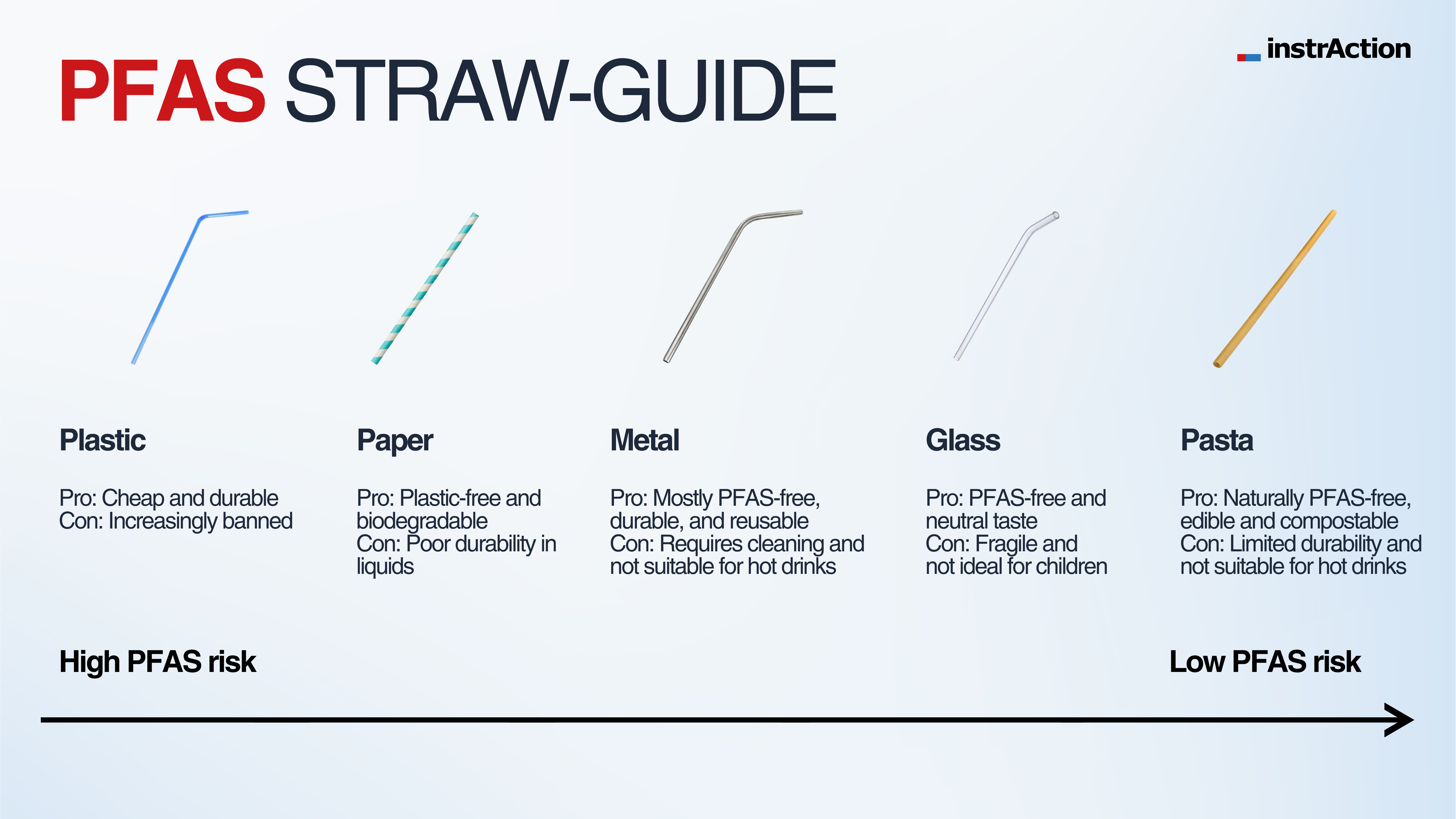
That’s where it gets complicated. Plastic straws have been replaced by paper ones in many regions, which is good for us and the environment, right? However, several studies found that what we use to substitute plastic (mostly paper and plant-based straws) can contain even higher PFAS levels than traditional plastic straws.
Straws: a closer look
Straws are a small product with an outsized signal.
To prevent paper from soaking through within minutes, which admittedly is very annoying, manufacturers often used fluorinated coatings. Testing by consumer and environmental organizations found PFAS in:
- paper straws
- bamboo straws
- molded fiber straws
This does not mean every straw is unsafe.
But it shows how PFAS have quietly found their way into some “green” alternatives, often without full transparency.
A better option? Pasta straws. PFAS-free and a crunchy snack once the drink is gone. Win-win!
Regulation is catching up, slowly
PFAS use in food contact materials is now under increasing scrutiny:
- Denmark has banned PFAS in paper and cardboard food packaging
- the EU is evaluating a broad PFAS restriction that would include food contact materials
- the US FDA has phased out some long-chain PFAS but monitoring continues
However, replacement chemistries and short-chain PFAS are still widely used and not all are fully assessed.
What this means for consumers
Food packaging is not the largest PFAS exposure pathway.
But it is one of the most widespread and avoidable ones.
Practical steps that can help reduce exposure:
- limit hot and fatty foods in disposable packaging
- use reusable containers where possible
- avoid reheating food in original packaging
- look for transparent PFAS-free certifications, not just marketing claims
- Pasta straws!
Why this matters beyond packaging
Food packaging highlights a recurring PFAS pattern:
chemicals optimized for performance first, with long-term exposure considered later.
Reducing PFAS in packaging lowers direct intake and helps prevent further release into waste streams, compost, wastewater, and eventually surface waters.
At instrAction, we work on the downstream side of this challenge: removing PFAS once they are already in water systems. But long-term progress requires both prevention and effective treatment.
Clean water doesn’t start at the tap. It starts with the materials we choose upstream.
Further readings:
European Food Safety Authority (EFSA)
Risk assessment of PFAS and food contact materials
European Chemicals Agency (ECHA)
PFAS restriction proposal including food contact materials
Food Packaging Forum
PFAS in food packaging and migration risks
Consumer Reports / NGO testing (straws and packaging)
OECD
PFAS use patterns and exposure pathways