


PFAS in Food Packaging and Straws
Fish is widely seen as a healthy choice. But recent testing in Europe shows it can also be a meaningful pathway for PFAS exposure, depending on where the seafood comes from and which species it is.
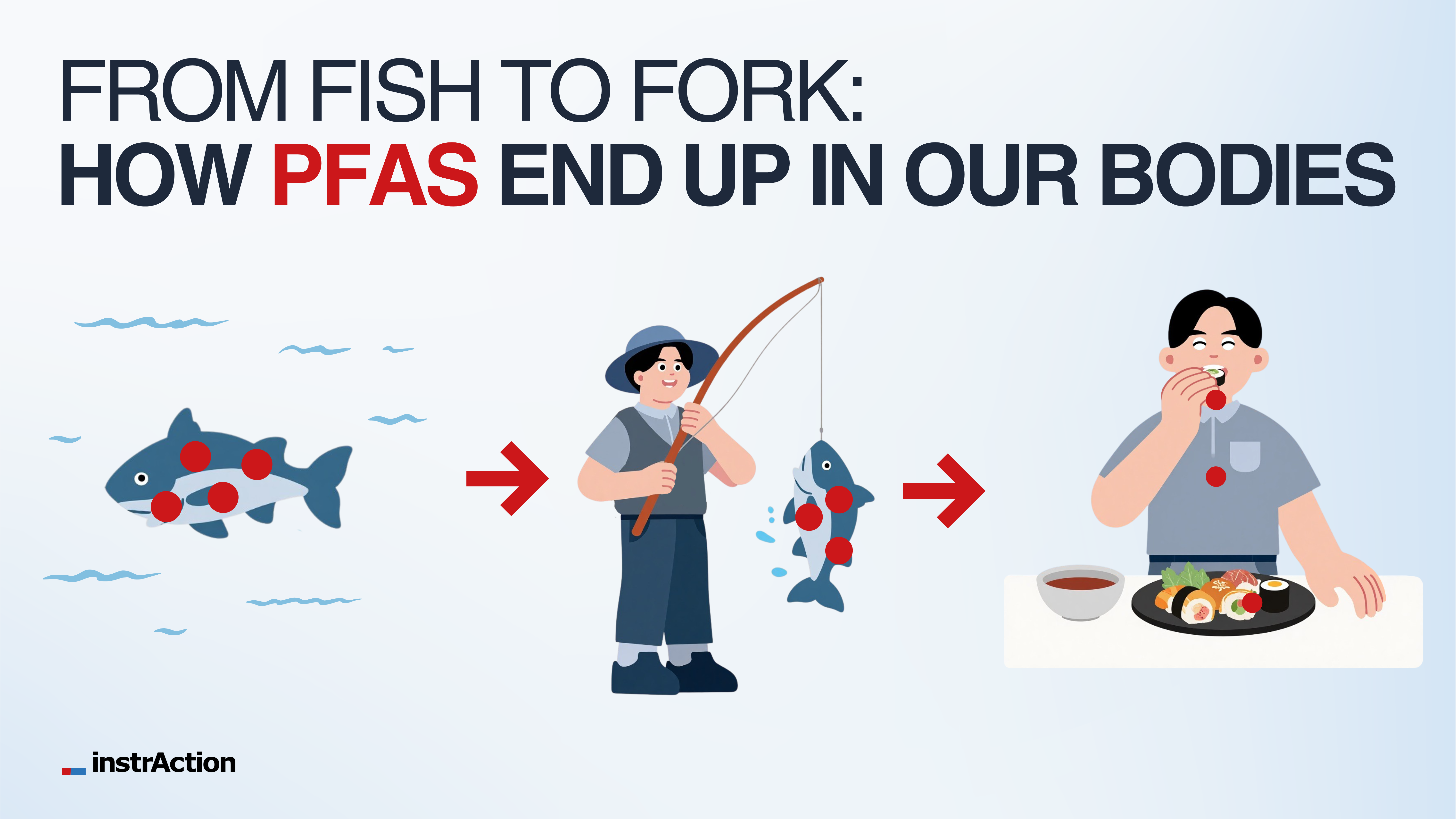
PFAS are highly persistent chemicals. Once they enter rivers and coastal waters, they can accumulate in marine ecosystems and move up the food chain. Over time, they may end up on our plates, circulate in our bodies, and potentially harm our health.
Find out how much seafood is considered safe to eat, and what you can do as a consumer to better protect yourself and your children.
How PFAS end up in fish and shellfish
PFAS can reach the ocean through industrial discharge, wastewater pathways, and legacy contamination sites. In water, some PFAS are highly mobile. Others tend to bioaccumulate, meaning concentrations can increase in organisms over time.
Fish and shellfish higher up the food chain are often highlighted as relevant contributors to dietary PFAS exposure in Europe.
A key benchmark: EFSA’s tolerable weekly intake
In 2020, the European Food Safety Authority (EFSA) set a group tolerable weekly intake of 4.4 ng per kg body weight per week for the sum of four PFAS: PFOA, PFOS, PFHxS, PFNA. EFSA based this on evidence related to effects on the immune response to vaccination.
To make that tangible:
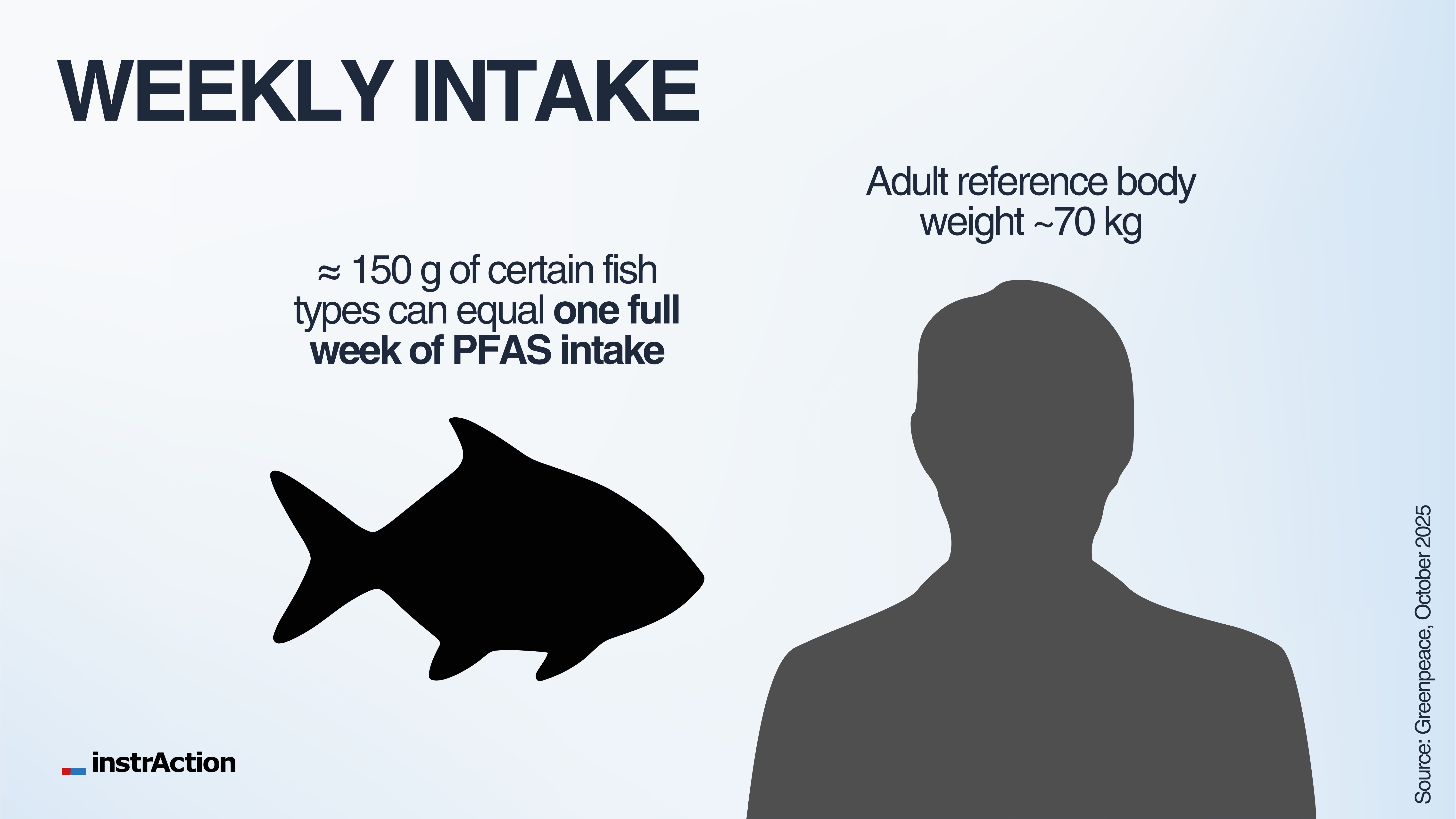
- An adult weighing 70 kg would reach the TWI at about 308 ng (Nanogramm) per week
What recent testing found in Europe
A 2025 Greenpeace investigation of seafood samples from the North and Baltic Seas reported that a single 150 g portion of certain species (including herring, plaice, turbot) may already reach the weekly PFAS intake recommended by EFSA for adults. For children, smaller portions may exceed the same benchmark due to lower body weight.
Important context: results depend heavily on species, location, and local contamination patterns. This is not a universal statement about all seafood.
Why children are mentioned so often
Children are more vulnerable to chemical exposure because they have lower body weight and developing immune systems. EFSA’s benchmark is based on long-term weekly intake over a lifetime, which makes early-life exposure particularly relevant.
What you can do as a consumer

You cannot fully control PFAS exposure, but you can reduce unnecessary risk.
- Look for transparent testing: If available, choose seafood suppliers and regions that publish contaminant monitoring results.
- Vary your diet: Rotating protein sources helps reduce repeated exposure from a single pathway.
- Follow local guidance: Some regions publish fish consumption advisories for specific water bodies.
Final Thoughts
Seafood is a clear reminder that PFAS are not just a “water problem”. Once persistent chemicals enter aquatic systems, they can travel through ecosystems and into the food chain.
The most effective way to protect long-term health is to reduce PFAS releases upstream, improve monitoring, and scale treatment solutions where contamination is already present.
Further readings:
- EFSA (2020) scientific opinion and news release on PFAS tolerable weekly intake European Food Safety Authority+1
- Greenpeace (2025) seafood testing, North Sea and Baltic Sea presseportal.greenpeace.de+1
- HBM4EU PFAS substance report (dietary contribution, seafood) HBM4EU
- EEA indicator on hazardous substances accumulating in marine organisms